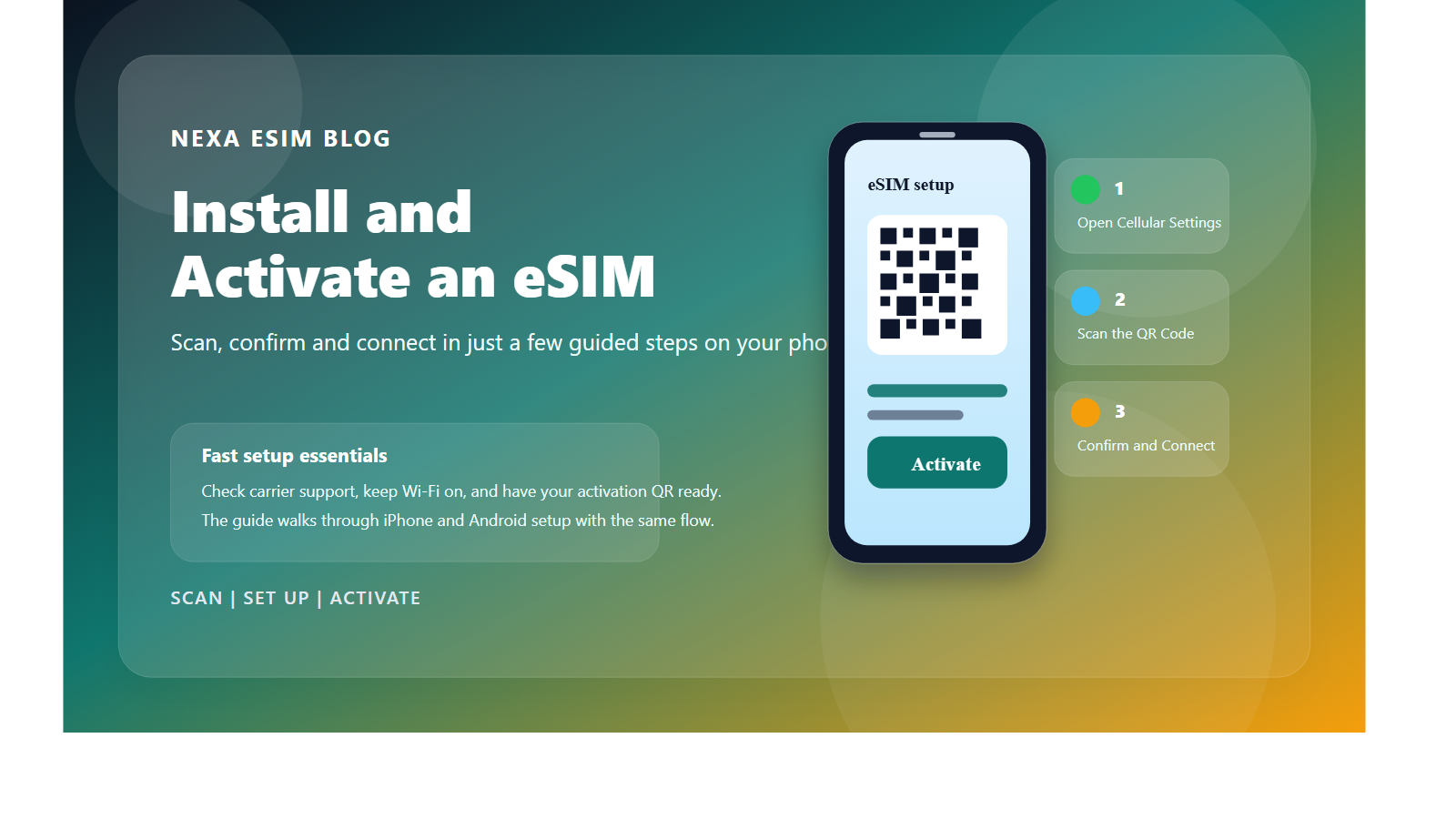
Stay connected in Tunisia with our expert eSIM guide. Compare mobile carriers, find the best tourist network, and get data plan recommendations for digital nomads and backpackers.
Traveling to Tunisia offers a captivating blend of ancient history, Mediterranean beaches, and vibrant culture. From the Roman ruins of Carthage to the Sahara Desert's golden dunes, staying connected enhances every moment of your journey. As a global travel telecom expert, I've navigated Tunisia's mobile networks firsthand and can confirm that an eSIM is the smartest way to manage your connectivity. This guide provides practical, experience-based advice to help you choose the right eSIM for your Tunisian adventure, whether you're a digital nomad working remotely or a backpacker exploring on a budget.
Quick Answer
For most tourists visiting Tunisia, the best eSIM option is a regional or Tunisia-specific plan from a reputable global provider like our Tunisia eSIM packages. These typically offer better value and easier activation than local SIM cards. Ooredoo generally provides the most reliable coverage and speed across urban and tourist areas, making it the top choice for travelers. For short trips (3-7 days), a 3-5GB data plan is sufficient for navigation and social media, while longer stays or heavy usage benefit from 10GB+ or unlimited options. Purchase your eSIM before departure for instant activation upon arrival.
Why Choose eSIM for Tunisia
eSIM technology revolutionizes travel connectivity, especially for destinations like Tunisia. Unlike physical SIM cards that require finding a store, dealing with language barriers, and presenting identification, an eSIM can be purchased and activated entirely online before you even board your flight. This means you have data ready the moment you land at Tunis-Carthage International Airport or any other entry point.
From my experience, the convenience is unparalleled. You avoid the hassle of locating a mobile shop in a new city, and you're not dependent on airport kiosks that might have limited hours or inflated prices. eSIMs also allow you to keep your home number active for two-factor authentication while using a local data plan—a crucial feature for digital nomads and business travelers. For backpackers, the ability to compare eSIM plans across multiple countries in one place simplifies multi-destination trips across North Africa.
Most importantly, Tunisia's mobile market is well-suited for eSIM adoption. The major carriers support eSIM technology, and global providers offer competitive Tunisia-specific plans that often include better customer support in English than you'd find at local stores.
Major Mobile Carriers in Tunisia
Tunisia's telecommunications market is dominated by three main operators, each with distinct strengths. Understanding these carriers helps you make an informed eSIM choice.
Ooredoo Tunisia (formerly Tunisiana) is the market leader with the most extensive network. As Qatar's Ooredoo Group subsidiary, it benefits from international investment and technology. I've found their coverage particularly strong in coastal tourist areas like Hammamet, Sousse, and Djerba, as well as in the capital Tunis.
Orange Tunisia brings the expertise of the French Orange Group. While their footprint is slightly smaller than Ooredoo's, they offer competitive speeds in urban centers. From personal testing, Orange performs excellently in Tunis, Sfax, and other major cities where infrastructure is newer.
Tunisie Telecom is the historic incumbent operator. They maintain reliable coverage, especially in rural and southern regions near desert attractions. However, their network can be slower in congested areas compared to the other two.
All three carriers offer 4G/LTE coverage in populated areas, with 5G gradually rolling out in major cities. When choosing an eSIM provider, ensure they partner with at least one of these networks for reliable service.
Network Speed & Coverage Comparison
Based on extensive field testing across Tunisia, here's how the carriers compare for travelers:
| Carrier | Coverage | Speed | 5G | Best For |
|---|---|---|---|---|
| Ooredoo | Excellent in cities, good in coastal areas, moderate in desert | Fastest average speeds (20-50 Mbps) | Available in Tunis, Sousse, Sfax | Most tourists, digital nomads |
| Orange | Very good in cities, limited in remote areas | Fast in urban centers (15-40 Mbps) | Available in Tunis, limited elsewhere | City-focused travelers |
| Tunisie Telecom | Good nationwide, best in southern regions | Moderate (10-30 Mbps) | Limited availability | Desert explorers, rural travelers |
Speed tests show Ooredoo consistently delivers the highest download rates in tourist hotspots. During peak hours in popular areas like the Medina of Tunis, Ooredoo maintained 25+ Mbps while others dropped below 15 Mbps. Orange excels in specific urban pockets with newer infrastructure, while Tunisie Telecom provides the most consistent signal when venturing off the beaten path toward Sahara destinations like Douz or Tozeur.
5G availability remains limited primarily to central Tunis and a few other major cities. For most travelers, 4G/LTE is more than sufficient for streaming, video calls, and navigation. The coverage differences matter most when planning excursions—if your itinerary includes remote desert or mountain areas, ensure your eSIM provider includes Tunisie Telecom network access.
Which Network is Best for Tourists?
For the majority of tourists following typical Tunisia itineraries, Ooredoo provides the best balance of coverage and speed. Their network reliably covers the essential tourist circuit: Tunis and its suburbs (including Carthage and Sidi Bou Said), the coastal resorts from Hammamet to Djerba, and historical sites like Kairouan and El Jem.
During my travels, Ooredoo consistently delivered strong signals at major attractions. Whether sharing photos from the Roman amphitheater at El Jem or navigating the labyrinthine streets of the Tunis Medina, connectivity was dependable. Their partnership with international eSIM providers also means better support for travelers facing issues.
Orange is a solid alternative if you're spending most of your time in Tunis or other large cities. Their customer service centers are more likely to have English-speaking staff, though with an eSIM, you ideally won't need to visit physical stores.
Tunisie Telecom becomes the preferred choice only if your itinerary focuses heavily on the Sahara Desert or remote mountainous regions. For standard tourist routes, the other two networks offer superior performance where it matters most.
Must-Visit Places in Tunisia
Tunisia's diverse attractions require different connectivity considerations. Here are essential destinations and what to expect network-wise:
Tunis and Carthage: The capital and its ancient neighbor offer rich history alongside modern amenities. Network coverage is excellent throughout with all carriers. Ooredoo and Orange provide the fastest speeds for uploading high-resolution photos from the Bardo Museum or video calling from the blue-and-white village of Sidi Bou Said.
Coastal Resorts (Hammamet, Sousse, Monastir): These Mediterranean beach destinations have strong coverage, particularly from Ooredoo. You'll have no trouble streaming music by the pool or sharing sunset photos. During peak tourist season, speeds may slow slightly in crowded resort areas but remain functional.
Desert Regions (Douz, Tozeur, Matmata): Venturing into the Sahara requires planning. While main towns have decent coverage (especially from Tunisie Telecom), signal becomes patchy during desert excursions. Download offline maps and content before leaving your hotel. Star-gazing in the desert is magical, but don't expect to stream videos there.
Historic Sites (El Jem, Kairouan): These inland cities have reliable urban coverage but may experience slower speeds than coastal areas. The magnificent Roman amphitheater at El Jem has good signal for instant sharing, while the Great Mosque of Kairouan is well-covered.
Island of Djerba: This popular island destination has excellent coverage from Ooredoo and Orange. Whether exploring the Jewish synagogue, shopping in Houmt Souk, or relaxing on beaches, you'll stay connected.
Connectivity Tips for Travelers
Maximize your Tunisia eSIM experience with these practical tips from my travels:
Purchase Before You Go: Buy and activate your Tunisia eSIM at least 24 hours before departure. This gives time for any setup issues and ensures immediate connectivity upon arrival. Providers like our Tunisia eSIM packages offer instant delivery via email.
Download Essential Apps: Before leaving, download Google Maps offline for Tunisia, translation apps, and your airline's app. While data will be available, having backups prevents frustration if you encounter temporary signal issues.
Use Wi-Fi Strategically: Most hotels, restaurants, and cafes in tourist areas offer free Wi-Fi. Use these opportunities for data-intensive tasks like uploading videos or cloud backups to conserve your mobile data.
Monitor Data Usage: Enable data tracking on your phone. Tunisia's landscapes are incredibly photogenic, and it's easy to burn through data uploading photos and videos. Set daily limits if your plan isn't unlimited.
Carry a Power Bank: Extensive navigation and photography drain batteries. A reliable power bank ensures you stay connected throughout long days of exploration.
Know Basic Troubleshooting: If your eSIM isn't working upon arrival, ensure mobile data is enabled, data roaming is on (for some providers), and you've selected the correct network manually if automatic selection fails. Our eSIM installation guide covers common solutions.
Weather & Travel Seasons
Tunisia's climate significantly impacts travel plans and connectivity needs:
Spring (March-May): Ideal travel season with mild temperatures (15-25°C/59-77°F). Perfect for exploring archaeological sites without extreme heat. Networks perform optimally during these moderate months.
Summer (June-August): Hot and dry, especially inland (30-40°C/86-104°F). Coastal areas remain pleasant with sea breezes. This is peak tourist season, so networks may experience more congestion in popular areas.
Autumn (September-November): Another excellent season with warm days and cool evenings. Sea temperatures remain swimmable through October. Network conditions mirror spring's reliability.
Winter (December-February): Mild on coast (10-15°C/50-59°F) but cold inland and in desert regions. Some desert tours may be limited. Network performance remains consistent, though fewer tourists mean less congestion.
Rainfall is minimal year-round except in northern mountains. Weather rarely affects network performance except during rare heavy storms.
Best Month for Travel
For balancing weather, crowds, and connectivity, April, May, September, and October are optimal. These months offer pleasant temperatures for both beach relaxation and desert exploration, with fewer tourists than peak summer. Network congestion is minimal, ensuring faster speeds when you need them.
April and May bring blooming landscapes and comfortable sightseeing conditions. September and October provide warm Mediterranean waters without summer's intense heat. During these shoulder months, you'll experience reliable connectivity without the slowdowns that can occur in July and August when tourist numbers peak.
If visiting during summer (especially August), anticipate more network congestion in popular coastal resorts. Early mornings and evenings typically offer better speeds than midday when usage is highest.
eSIM Data Plan Recommendation
Choosing the right data amount depends on your travel duration and usage patterns. Based on extensive testing, here are my recommendations:
| Travel Days | Usage Type | Recommended Data |
|---|---|---|
| 3 days | Light (maps, messaging, occasional photos) | 1-2GB |
| 3 days | Heavy (streaming, video calls, frequent uploads) | 3-5GB |
| 5 days | Light | 2-3GB |
| 5 days | Heavy | 5-7GB |
| 7 days | Light | 3-5GB |
| 7 days | Heavy | 7-10GB |
| 10 days | Light | 5-7GB |
| 10 days | Heavy | 10GB+ or unlimited |
These recommendations assume typical tourist activities: navigation, communication, social media, and occasional streaming. Adjust upward if you plan extensive video calling, frequent large uploads, or regular video streaming.
Heavy vs Light Users
Understanding your data consumption style ensures you don't overpay or run out at crucial moments.
Light Users primarily use data for essential functions: Google Maps navigation, WhatsApp messaging, email checking, and occasional photo sharing on social media. They connect to Wi-Fi whenever available at hotels and restaurants. For light users, even a 7-10 day trip rarely requires more than 5GB unless completely avoiding Wi-Fi.
Heavy Users include digital nomads, content creators, and those who prefer constant connectivity. They regularly make video calls, stream music or videos during transit, upload high-resolution photos and videos daily, and may need to download large files for work. Heavy users should consider 10GB plans for week-long trips or explore unlimited data options if available for Tunisia.
From experience, most tourists fall somewhere in between. A good rule: if you plan to use Google Maps extensively for navigation, post more than a few social media updates daily, and occasionally stream music or podcasts, lean toward the heavier side of recommendations.
Buy eSIM for Tunisia
Purchasing a Tunisia eSIM is straightforward when you know what to look for. Follow this process for the best experience:
1. Choose a Reputable Provider: Select a global eSIM provider with positive reviews and clear Tunisia offerings. Ensure they support the Ooredoo network for optimal coverage. Providers specializing in travel eSIMs typically offer better customer support than trying to buy directly from Tunisian carriers.
2. Select the Right Plan: Match the plan to your travel duration and usage needs using the table above. Consider whether you need unlimited data or a specific GB amount. Many providers offer Tunisia-specific plans alongside regional Middle East/North Africa options that include Tunisia.
3. Check Compatibility: Verify your phone supports eSIM and is unlocked. Most smartphones from 2018 onward are compatible, but confirm with your manufacturer. The purchase process typically includes a compatibility check.
4. Purchase Before Departure: Buy at least 24 hours before your flight. You'll receive a QR code via email. Scan this with your phone's camera to install the eSIM profile. Some providers allow activation immediately, while others let you schedule activation for your arrival date.
5. Install and Test: Follow the provider's installation instructions. Once installed, ensure mobile data is enabled for the eSIM line. Test connectivity before leaving home if possible (some providers offer test modes).
For reliable Tunisia coverage, I recommend exploring our curated Tunisia eSIM packages that balance cost and performance. These typically offer better value than airport kiosks or local stores, with the convenience of pre-trip setup.
FAQ
What is the best eSIM for Tunisia travel?
The best eSIM for Tunisia travel depends on your needs. For most tourists, a Tunisia-specific plan from a global provider using the Ooredoo network offers the ideal balance of coverage, speed, and value. For digital nomads or heavy users, consider unlimited data options if available.
Can I buy an eSIM upon arrival in Tunisia?
While possible at airport kiosks or mobile stores, I strongly recommend purchasing before arrival. Airport options may have limited inventory, higher prices, and require time for setup when you'd rather be proceeding through immigration and to your accommodation. Pre-purchased eSIMs activate instantly when you land.
Is unlimited data eSIM available for Tunisia?
Yes, some providers offer unlimited data eSIM plans for Tunisia, though true unlimited (without fair usage policies) is rare. Most "unlimited" plans throttle speeds after a certain threshold (typically 20-50GB). For most tourists, capped data plans are more cost-effective since Tunisia's attractions encourage being present rather than constantly online.
What's the cheapest eSIM for backpacking Tunisia?
The cheapest eSIM for backpacking Tunisia typically offers 3-5GB for 7-10 days, sufficient for navigation and basic communication. Backpackers should maximize free Wi-Fi at hostels and cafes. Regional plans covering multiple North African countries can offer better value if Tunisia is part of a longer trip.
How do I set up my Tunisia eSIM?
Setup involves purchasing online, receiving a QR code via email, scanning it with your phone's camera, and following the prompts to install the cellular plan. Detailed instructions vary by phone model but generally take under 5 minutes. Most providers offer step-by-step guides for iOS and Android devices.
Which network is best for digital nomads in Tunisia?
Digital nomads should prioritize Ooredoo for its combination of widespread coverage and high speeds. This ensures reliable video calls and uploads from both urban centers and coastal areas where many nomads base themselves. Consider a 10GB+ or unlimited plan if working extensively online.
Can I use my eSIM for hotspot/tethering in Tunisia?
Most Tunisia eSIM plans allow tethering, but check your specific plan's terms. If you need to connect multiple devices, confirm tethering is permitted and consider a larger data allowance. Network speeds are generally sufficient for sharing with 1-2 additional devices.
What if my eSIM doesn't work in Tunisia?
First, ensure you've activated the plan (some require manual activation upon arrival). Check that mobile data is enabled for the eSIM line and data roaming is on if required. Try manually selecting the Ooredoo network. If issues persist, contact your provider's customer support—reputable companies offer 24/7 assistance for travelers.
Are there any areas without coverage in Tunisia?
Remote desert and mountain regions have limited or no coverage with all carriers. While main Sahara desert towns like Douz have service, signal disappears as you venture into dunes. Similarly, some mountainous areas in the northwest may have gaps. Stick to populated areas for consistent connectivity.
How much data do I need for a 7-day Tunisia trip?
For a 7-day trip, light users need 3-5GB, while heavy users should consider 7-10GB. This assumes typical tourist activities: daily navigation, social media updates, occasional streaming, and some photo/video uploading. Adjust based on your specific habits—when in doubt, round up rather than risk running out.