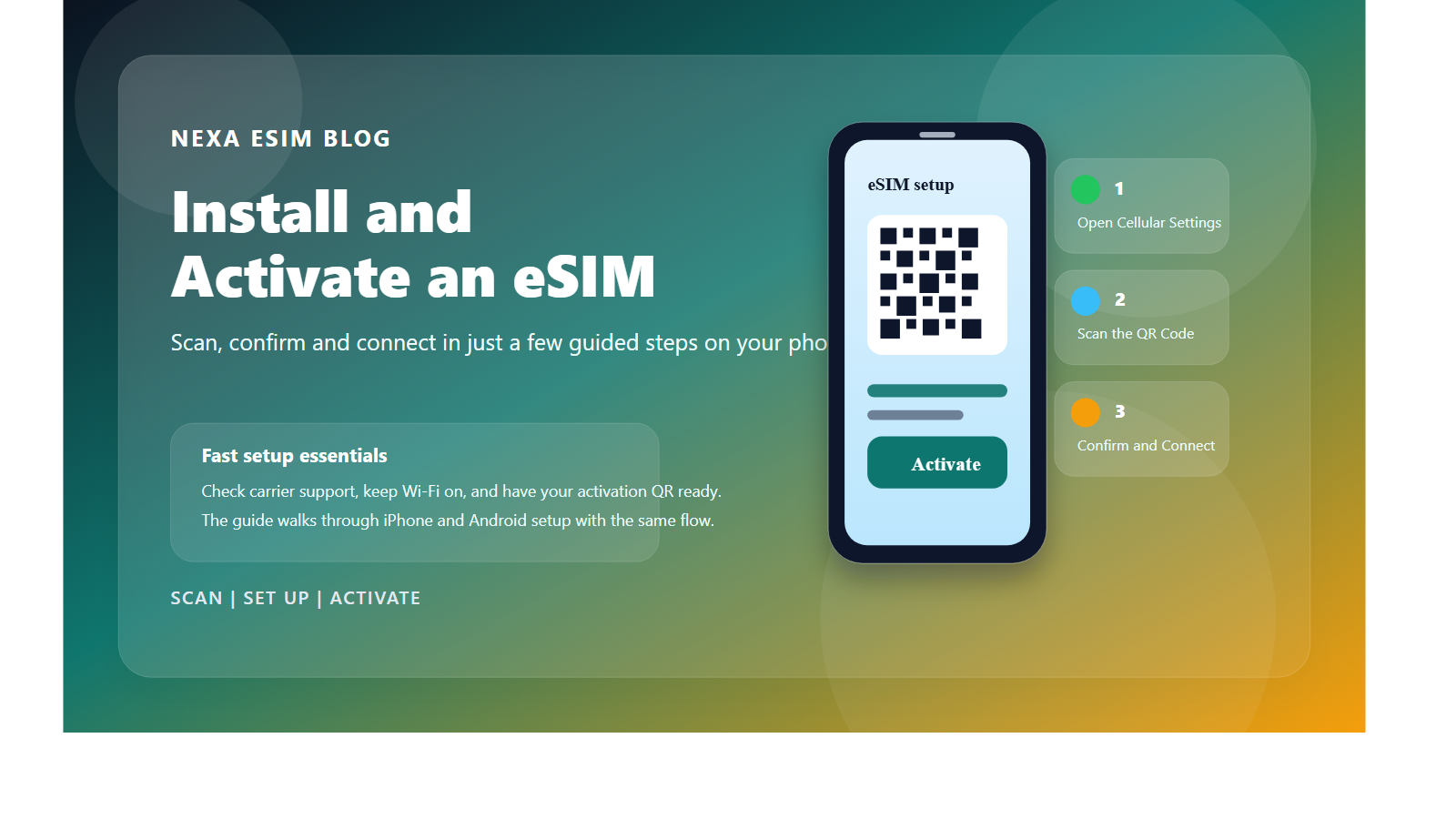
Complete India eSIM travel guide for 2026. Compare Jio, Airtel, and Vi networks. Get instant 4G/5G data from $3.99 with free QR code delivery.
India eSIM is the easiest way to stay connected during your trip to India in 2026. Skip the hassle of buying a physical SIM card at the airport ? with an India eSIM from NexaEsim, you get instant 4G/5G data delivered as a QR code to your email, ready to activate before you even board your flight. Plans start from just $3.99.
For travelers specifically visiting the capital, a dedicated guide on Buy eSIM for Delhi Travel — Best eSIM for Delhi, India (2026) can provide tailored advice.
Quick Answer
For most travelers to India, we recommend a 5 GB / 7-day plan ($9.99) or 10 GB / 15-day plan ($14.99) from NexaEsim. These plans use Jio and Airtel networks with 4G/5G coverage across all major tourist destinations including Delhi, Mumbai, Goa, Jaipur, and Kerala. Buy your India eSIM here and receive your QR code in minutes.
For a 7-day trip, we recommend at least 5 GB for light use or 15 GB+ for heavy use, and you can find specific plans in our guide to eSIM India Unlimited 7 Days: Pick the simplest unlimited plan for a one-week trip.
Why Choose eSIM for India Travel?
Traveling to India with an eSIM offers several advantages over traditional SIM cards. First, you skip the long queues at airport SIM card counters ? Indian airports are famously crowded, and buying a local SIM can take 30-60 minutes including ID verification. With eSIM, you're connected the moment you land.
Read eSIM India Unlimited 30 Days: Choose the Right Month‑Long Plan for the details you need before making a decision.
Second, India's telecom regulations require ID verification for physical SIMs, which can be complicated for foreign tourists. eSIM bypasses this entirely. Third, you keep your home number active on your physical SIM slot while using the India eSIM for data ? no need to swap cards or risk losing your home SIM.
Ready to get connected? India eSIM plans in 3 simple steps:
Check if your device is compatible on our compatible devices page.
Major Mobile Carriers in India
India has three major mobile carriers. Understanding their strengths helps you choose the right eSIM plan:
| Carrier | Coverage | Speed | 5G Cities | Best For |
|---|---|---|---|---|
| Jio | ????? | 4G: 25-40 Mbps, 5G: 300-700 Mbps | 100+ | Best overall coverage, rural areas |
| Airtel | ????? | 4G: 30-50 Mbps, 5G: 500-1000 Mbps | 80+ | Fastest 5G, major cities |
| Vi (Vodafone-Idea) | ????? | 4G: 15-30 Mbps, 5G: Limited | 10+ | Budget plans, urban areas |
Network Speed & Coverage Comparison
India's mobile network infrastructure has improved dramatically. Jio leads with nationwide 4G coverage reaching even remote villages, while Airtel offers the fastest 5G speeds in metropolitan areas. In tourist hotspots like Goa, Rajasthan, Kerala, and the Golden Triangle (Delhi-Agra-Jaipur), both Jio and Airtel deliver excellent speeds above 25 Mbps on 4G.
In mountainous areas like Himachal Pradesh, Uttarakhand, and parts of the Northeast, Jio provides the most reliable coverage. If you're trekking in Ladakh or visiting remote areas of the Himalayas, expect 3G/4G coverage in towns and limited connectivity on trails.
Which Network is Best for Tourists?
Jio is the best choice for most tourists. It has the widest coverage across India, excellent 4G speeds everywhere, and rapidly expanding 5G. Whether you're exploring the chaos of Old Delhi, relaxing on Goa's beaches, cruising Kerala's backwaters, or trekking in the Himalayas ? Jio keeps you connected.
If you're staying primarily in major cities (Delhi, Mumbai, Bangalore, Hyderabad) and want the absolute fastest speeds, Airtel's 5G network is impressive ? reaching 500+ Mbps in covered areas. NexaEsim India plans use both Jio and Airtel networks to ensure the best possible experience.
Must-Visit Places in India (and Connectivity Guide)
- Golden Triangle (Delhi, Agra, Jaipur) ? Excellent 4G/5G coverage. Perfect for first-time visitors. Use maps and translation apps freely.
- Goa ? Strong 4G coverage along beaches and towns. Great for sharing photos and video calls back home.
- Kerala (Kochi, Munnar, Alleppey) ? Good 4G in cities, reliable 3G/4G in hill stations and backwaters.
- Rajasthan (Udaipur, Jodhpur, Jaisalmer) ? Good 4G in cities, 3G in desert areas. Download offline maps for desert excursions.
- Varanasi ? Good 4G coverage. The spiritual capital is well-connected for streaming and sharing.
- Himalayas (Manali, Shimla, Leh) ? Good coverage in towns, limited on mountain passes. Download offline content before heading to remote areas.
Connectivity Tips for Travelers
India's digital infrastructure supports travelers well, but a few tips will enhance your experience:
- Download offline maps before visiting Rajasthan's desert areas or Himalayan regions.
- Use UPI-compatible payment apps ? India is rapidly going cashless, and many shops accept digital payments.
- Enable Wi-Fi calling as a backup in areas with weaker cellular coverage.
- Set data warnings on your phone to monitor usage, especially if streaming video.
- Install your eSIM before departure ? follow our step-by-step installation guide to set up at home.
Weather & Travel Seasons in India
India's climate varies dramatically by region, affecting both your travel plans and data usage patterns:
- October to March (Peak Season) ? Cool, dry weather across most of India. Best for the Golden Triangle, Rajasthan, Kerala, and Goa. High tourist season means busy networks in popular spots, but eSIM performance remains excellent.
- April to June (Summer) ? Hot in plains but ideal for hill stations (Shimla, Darjeeling, Ooty). Good connectivity in these areas.
- July to September (Monsoon) ? Heavy rains, especially along the west coast and Northeast. Network speeds may temporarily slow during storms, but coverage remains reliable.
Best Month for Travel
November is the ideal month for India travel. Post-monsoon weather brings clear skies, comfortable temperatures (20-28?C in most regions), and lush green landscapes. Tourist crowds haven't peaked yet (that happens December-January), so you get the best of both worlds ? great weather and fewer crowds. Network performance is optimal with less tourist congestion on cell towers.
eSIM Data Plan Recommendation
| Travel Days | Usage Type | Recommended Data | Price (from) |
|---|---|---|---|
| 1-3 days | Light (maps, chat) | 1 GB | $3.99 |
| 5-7 days | Moderate (social media, maps) | 5 GB | $9.99 |
| 7-15 days | Moderate to Heavy | 10 GB | $14.99 |
| 15-30 days | Heavy (streaming, hotspot) | 20 GB | $24.99 |
| 30 days | Unlimited | Unlimited | $19.99 |
Heavy vs Light Users
Light users (Google Maps navigation, WhatsApp messaging, occasional social media browsing, checking emails) typically use 500 MB ? 1.5 GB per day. A 5 GB plan is sufficient for a week-long trip.
Heavy users (video calls with family, Instagram/TikTok uploading, streaming Netflix/YouTube, using phone as hotspot for laptop) consume 2-5 GB per day. Choose a 10-20 GB plan or go unlimited if you're a digital nomad working from India.
India's affordable eSIM pricing means upgrading to a larger plan is cost-effective. We recommend buying slightly more data than you think you'll need ? topping up mid-trip is possible but costs more per GB.
Buy Your India eSIM
Ready to get connected? Buy your India eSIM from NexaEsim in 3 simple steps:
- Choose your plan ? Select data amount and validity period on our India eSIM page.
- Receive QR code ? Delivered to your email within minutes after purchase.
- Scan & activate ? Follow our installation guide to activate. Takes under 2 minutes.
With 4G/5G coverage across India, instant delivery, and plans from just $3.99 ? NexaEsim is the smart choice for India travel connectivity in 2026.
FAQ
Does my phone support eSIM in India?
Most modern smartphones support eSIM including iPhone XS and newer, Samsung Galaxy S20+, Google Pixel 3 and newer, and many other devices. Check our compatible devices page for the full list.
Which network is best for tourists in India?
Jio offers the best overall coverage across India with strong 4G/5G in both cities and rural areas. Airtel is excellent in major cities with the fastest 5G speeds. For most tourists visiting popular destinations, either Jio or Airtel will work perfectly.
How much data do I need for traveling in India?
Light users (maps, messaging, social media) need 1-2 GB per day. Heavy users (video calls, streaming, hotspot) need 3-5 GB per day. For a 7-day trip, we recommend at least 5 GB for light use or 15 GB+ for heavy use.
Can I use eSIM in rural parts of India?
Yes, Jio has the widest rural coverage in India. In very remote areas like parts of the Himalayas or Northeast India, coverage may be limited to 3G/4G. Major tourist destinations including Rajasthan, Kerala, and Goa all have excellent 4G coverage.
How do I install an India eSIM?
After purchasing from NexaEsim, you receive a QR code via email within minutes. Go to Settings > Cellular > Add eSIM on iPhone, or Settings > Connections > SIM Manager on Samsung. Scan the QR code and your India eSIM is ready. See our installation guide for step-by-step instructions.
Is 5G available for eSIM in India?
Yes, 5G is available in 100+ Indian cities as of 2026. Jio and Airtel both offer 5G coverage in Delhi, Mumbai, Bangalore, Chennai, Hyderabad, Kolkata, and other major metros. NexaEsim plans include 5G access where available at no extra cost.
How much does an India eSIM cost?
India eSIM plans on NexaEsim start from just $3.99 for 1 GB. Popular plans include 5 GB for $9.99 (7 days), 10 GB for $14.99 (15 days), and unlimited data plans from $19.99 for 30 days.