A practical Heathrow Airport eSIM guide covering UK carriers, coverage, best travel months, and how much data most tourists actually need.
Quick Answer
The best eSIM for Heathrow Airport travel is usually a UK plan that activates by QR code, works on a top-tier local network, and gives you enough data for maps, trains, rideshare, messaging, and hotel check-ins from the moment you land. For most visitors, a London-friendly 5G plan is a better option than airport kiosks or expensive roaming.
Why Choose eSIM for Heathrow Airport Travel
If you land at Heathrow after a long-haul flight, the last thing you want is to queue for a plastic SIM, hunt for Wi-Fi, or discover your home carrier roaming bill later. An eSIM is easier because you can buy it before departure, scan a QR code while still on Wi-Fi, and switch mobile data on when the plane lands. That means faster access to border forms, train tickets, WhatsApp, Google Maps, and ride-hailing apps.
Better than physical SIM
No shop visit, no tiny eject pin, no risk of losing your home SIM. You can keep your regular number active for OTPs while using eSIM for data.
Useful right at the airport
Heathrow has free Wi-Fi, but an eSIM is far more convenient once you move between terminals, trains, taxis, and hotel check-in points.
Stable for city travel
A strong UK network usually gives you reliable 4G or 5G across central London, popular attractions, and most day-trip routes from Heathrow.
If you are still deciding between local and regional coverage, compare a UK eSIM with a broader Europe eSIM. If you are new to setup, the installation guide and how eSIM works pages explain the basics before you fly.
Major Mobile Carriers in the United Kingdom
The UK tourist market usually comes down to four familiar network names: EE, Vodafone, Three, and O2. All of them work in London and around Heathrow, but they feel different once you compare consistency, indoor signal, suburban travel, and how well they behave on trains or day trips outside the capital.
- EE is the safest premium choice when you care most about broad coverage and dependable performance in busy urban areas.
- Vodafone is strong for international travelers who want a premium network with good city performance and broad support.
- Three is often attractive for value-focused travelers, especially when price matters more than absolute consistency.
- O2 is a balanced option with good urban reach and a familiar presence for visitors staying mainly in London and surrounding cities.
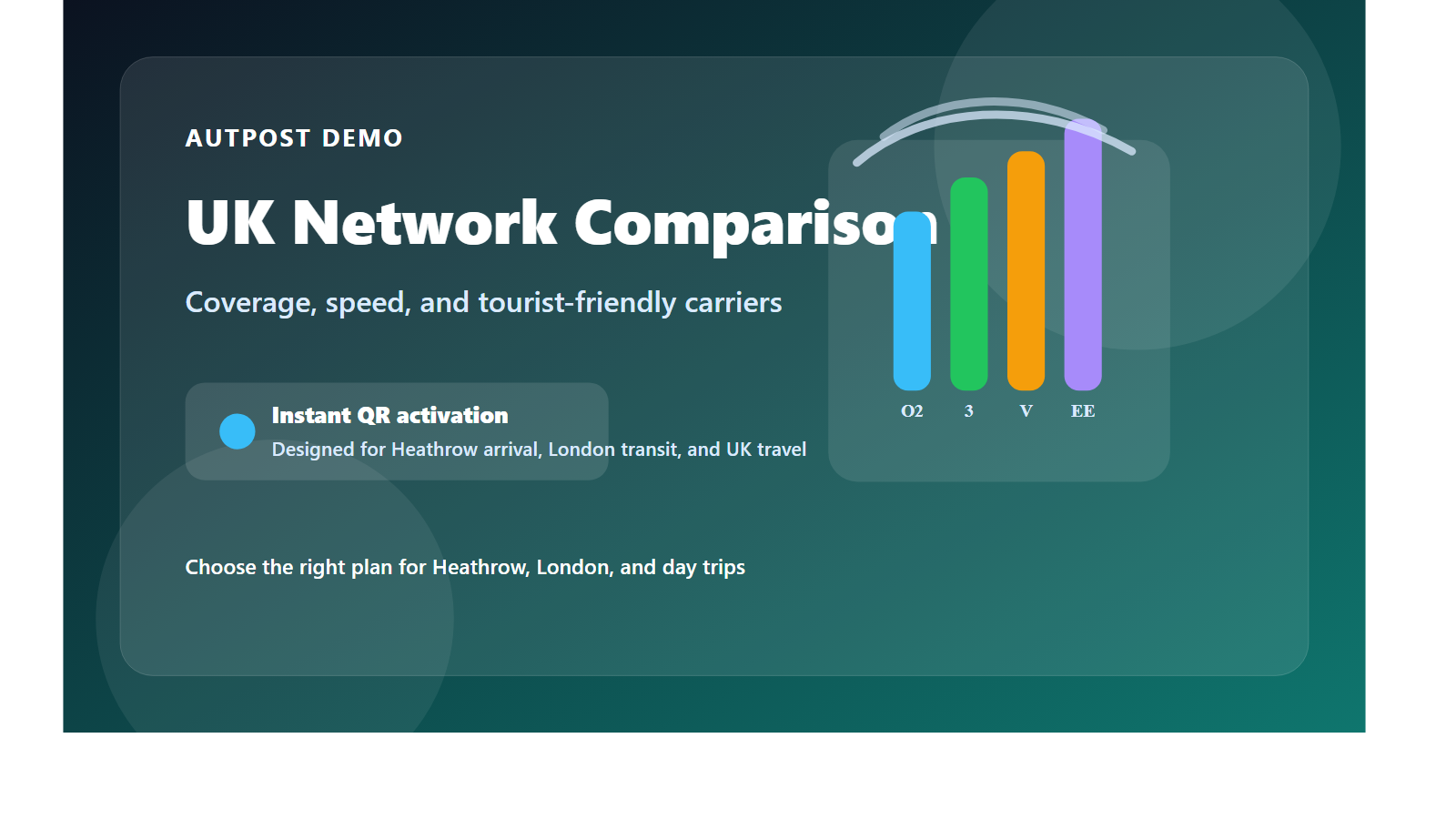
Network Speed & Coverage Comparison
| Carrier | Coverage | Speed | 5G | Best For |
|---|---|---|---|---|
| EE | Excellent in London, airports, motorways, and many regional routes | Fast and consistent | Strong metro and transport presence | Business travel, first-time visitors, dependable performance |
| Vodafone | Very good in major cities and tourist corridors | Fast | Good urban and airport presence | Premium travelers who want a strong all-round option |
| Three | Good in London and popular urban areas | Good to fast | Strong in many city zones | Budget-conscious travelers who still want 5G in cities |
| O2 | Good in London, suburban areas, and common leisure routes | Good | Reliable in many city districts | Balanced travelers who prioritize stable everyday usage |
Which Network Is Best for Tourists?
For Heathrow arrivals, my practical recommendation is simple: choose EE if you want the most dependable all-round result, especially if your itinerary includes central London, frequent train transfers, or business travel. Choose Three if you mainly want affordable data for city use. Choose Vodafone if you want a premium alternative with strong coverage in tourist-heavy areas. Choose O2 if you prefer a balanced network for normal city use and common day trips.
Best for fast data
EE is the safest recommendation for visitors who rely on maps, work apps, video calls, and smooth 5G in London.
Best for value
Three usually makes the most sense if you want more data for less money and you stay mostly in urban tourist zones.
Best for wider trips
EE or Vodafone are safer once your trip moves beyond Heathrow and central London into longer rail journeys or regional stops.
Must-Visit Places in the United Kingdom
Even if your keyword starts at Heathrow, most travelers are really planning a wider UK itinerary. That is why your eSIM needs to work beyond the terminal.
Central London
Westminster, Covent Garden, Soho, and South Bank are dense with attractions, tickets, and transit changes, so steady data is essential.
Windsor
An easy day trip from Heathrow with castles, river walks, and regular transport connections that are easier to manage with mobile data.
Oxford
A strong pick for history, college architecture, and short escapes from London, with navigation and train updates needed throughout the day.
Bath
Excellent for slower cultural travel, Roman heritage, and photo-heavy itineraries that usually consume more upload data than expected.
Edinburgh
If your UK trip extends north, choose a plan with enough allowance for longer rail days, mapping, and hotel coordination.
The Cotswolds
Picturesque villages and scenic drives are beautiful, but signal can feel less uniform than in central London, so stronger coverage helps.
Connectivity Tips for Travelers
- Heathrow terminals and central London: Signal is usually strong on all major networks, so most visitors notice the biggest difference in speed rather than basic connectivity.
- Underground and station transitions: Expect short weak patches depending on the line, the station, and whether you are between underground segments.
- Regional day trips: If you are visiting countryside destinations, premium coverage matters more than the cheapest plan headline.
- Heavy map users: Choose more data than you think you need if your trip includes constant navigation, restaurant research, attraction bookings, and social uploads.
Weather & Travel Seasons
The UK is a year-round destination, but the travel experience changes a lot with daylight, school holidays, and rain. Spring and early autumn are often the easiest seasons for first-time visitors because crowds are more manageable than peak summer and the weather is usually milder than winter.
| Season | What to Expect | Travel Notes |
|---|---|---|
| March to May | Mild temperatures, greener parks, changeable rain | Good balance for sightseeing and day trips |
| June to August | Peak visitor season, longer daylight, higher prices | Best for full itineraries, but busier attractions |
| September to October | Comfortable weather, smaller crowds, good city walking | Often the sweet spot for London and southern England |
| November to February | Cooler, darker, festive in December, more indoor planning | Good for lower prices outside holiday weeks |
Best Month for Travel
If you want the best balance of sightseeing weather, pricing, and crowd levels, May, June, and September are usually the strongest choices. They are especially comfortable for travelers landing at Heathrow and heading straight into London or nearby day trips.
eSIM Data Plan Recommendation
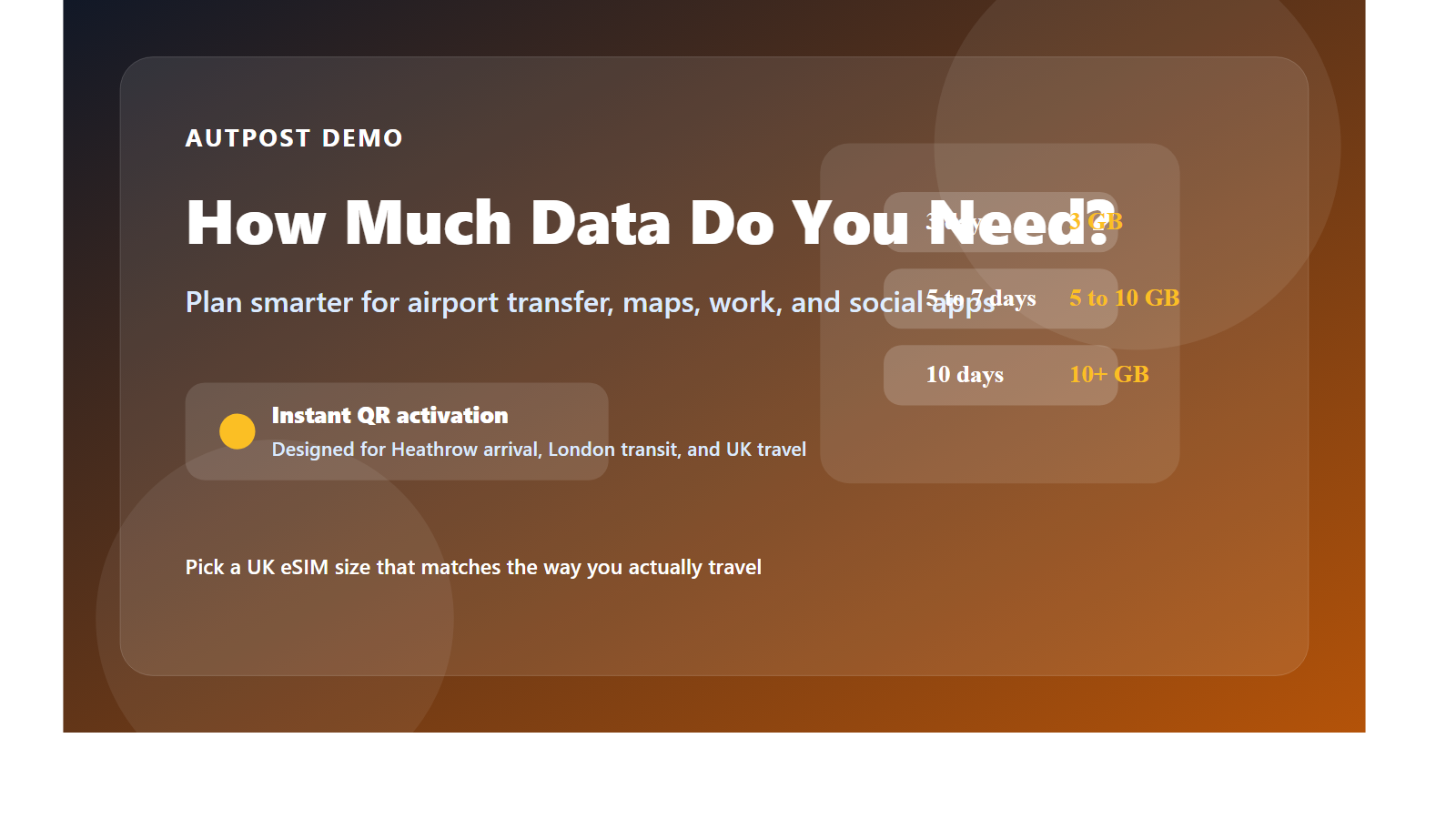
| Travel Days | Usage Type | Recommended Data |
|---|---|---|
| 3 days | Maps, messaging, light browsing | 3 GB |
| 5 days | City travel, photo uploads, music streaming | 5 GB |
| 7 days | Active sightseeing, social media, rideshare, translation apps | 7 GB to 10 GB |
| 10 days | Mixed leisure and work, frequent navigation, hotspot backup | 10 GB to unlimited |
Heavy vs Light Users
Light users mainly need messaging, maps, email, and occasional search. Heavy users stream video, upload stories, make video calls, or tether a laptop. If your Heathrow trip includes TikTok, YouTube, cloud backups, or remote work, choose a larger allowance than the minimum table suggests.
Buy eSIM for Heathrow Airport
You do not need to wait until you land to buy an eSIM for Heathrow. The smoother approach is to purchase before departure, receive the QR code by email, and install the plan while you still have stable home Wi-Fi. Once you arrive, open your eSIM settings, switch mobile data to the travel plan, and enable roaming if the provider requires it.
Can I use it at the airport?
Yes. A properly installed eSIM can start working as soon as you land and disable airplane mode.
Do I need registration?
Most travel eSIM purchases are much simpler than traditional prepaid SIM registration and are handled digitally.
How do I activate quickly?
Scan the QR code, set the eSIM as your data line, turn on data roaming if needed, and test your connection before leaving the terminal.
Before purchase, confirm that your phone is compatible on the compatible devices page. That one check prevents most activation issues.
FAQ