Discover how to stay connected in South Africa with the best eSIM options for tourists. Compare networks, find the right data plan, and explore must-visit destinations with reliable mobile coverage.
Quick Answer
For most travelers visiting South Africa, an eSIM from Vodacom or MTN provides the best combination of coverage and speed. These networks offer reliable service in major cities like Cape Town and Johannesburg, along popular tourist routes like the Garden Route, and in many national parks. For a typical 7-10 day trip, a 5-10GB data plan is sufficient for most users, while digital nomads or heavy streamers might prefer 15GB+ options. You can purchase and activate your South Africa eSIM before departure through providers like our South Africa eSIM packages, ensuring connectivity immediately upon arrival.
Why Choose eSIM for South Africa Travel
Traveling to South Africa presents unique connectivity challenges - from urban exploration in Cape Town to remote safari adventures in Kruger National Park. An eSIM solves these challenges elegantly. Unlike physical SIM cards that require finding a store upon arrival, eSIMs can be purchased and installed before you even board your flight. This means you land with working data, ready to navigate, share photos, or contact your accommodation.
For tourists, eSIMs offer particular advantages in South Africa. You maintain your home number for important calls while using local data rates, avoiding expensive international roaming charges. The flexibility to choose data-only plans means you're not paying for voice minutes you won't use. Digital nomads and backpackers appreciate being able to switch between multiple eSIM profiles if traveling to neighboring countries like Namibia or Botswana.
South Africa's major airports - OR Tambo in Johannesburg, Cape Town International, and King Shaka in Durban - all have excellent 4G and 5G coverage, making eSIM activation seamless upon arrival. The country's well-developed telecommunications infrastructure means eSIMs work reliably across most tourist destinations.
Major Mobile Carriers in South Africa
South Africa's mobile market is dominated by four main carriers, each with distinct strengths for travelers:
Vodacom: As the largest network, Vodacom offers the most extensive coverage, particularly valuable for travelers venturing beyond major cities. Their network reaches deep into rural areas and national parks, though speeds can vary in remote locations.
MTN: Close competitor to Vodacom with excellent urban coverage and generally faster speeds in metropolitan areas. MTN has invested heavily in 5G infrastructure in cities, making it ideal for data-heavy users in Cape Town, Johannesburg, and Durban.
Cell C: Operates as a mobile virtual network operator (MVNO) that primarily uses Vodacom's infrastructure with some of its own towers. Often offers competitive pricing, making it popular among budget-conscious travelers.
Telkom: The smallest of the four major players but has been expanding rapidly. Telkom offers good value plans and has decent coverage in urban areas, though rural coverage lags behind Vodacom and MTN.
Network Speed & Coverage Comparison
| Carrier | Coverage | Speed | 5G | Best For |
|---|---|---|---|---|
| Vodacom | Excellent nationwide, best in rural areas | Good to very good | Available in major cities | Safari travelers, road trippers, those visiting remote areas |
| MTN | Very good nationwide, excellent in urban areas | Very good to excellent | Widest 5G availability | City explorers, digital nomads, data-heavy users |
| Cell C | Good in urban areas, fair in rural areas | Good | Limited availability | Budget travelers, short city stays |
| Telkom | Good in urban areas, limited rural coverage | Fair to good | Limited availability | Value-focused urban travelers |
Which Network is Best for Tourists?
The best network depends entirely on your travel itinerary. For most first-time visitors splitting time between cities and popular tourist destinations, Vodacom provides the most reliable all-around coverage. If you're spending most of your time in Cape Town, Johannesburg, or Durban with occasional day trips, MTN's faster urban speeds might serve you better.
For safari enthusiasts heading to Kruger National Park, Sabi Sands, or other game reserves, Vodacom is typically the safest choice. While coverage in national parks is never guaranteed (and part of the safari experience is disconnecting), Vodacom has the most extensive infrastructure near major reserves.
Backpackers following the Garden Route from Cape Town to Port Elizabeth will find both Vodacom and MTN work well along this popular tourist corridor. Digital nomads working remotely from South Africa's cities will appreciate MTN's 5G availability and consistent speeds for video calls and large file transfers.
Budget-conscious travelers might consider Cell C for shorter urban stays, though for the small price difference, Vodacom or MTN often provide better value through more reliable service.
Must-Visit Places in South Africa
South Africa's diversity demands connectivity in varied environments. In Cape Town, you'll want reliable data for navigating the city, booking Table Mountain cable car tickets online, and sharing photos from the V&A Waterfront. The Cape Winelands (Stellenbosch, Franschhoek) have good coverage for researching vineyards and arranging tastings.
Along the Garden Route, coverage is generally good in towns like Knysna, Plettenberg Bay, and Mossel Bay, but can become patchy in remote coastal areas between towns. For Kruger National Park safaris, expect limited coverage at your accommodation lodge (most have WiFi) but minimal to no signal during game drives - which is part of the experience.
Johannesburg and Pretoria have excellent urban coverage, useful for exploring museums, markets, and historical sites. The Drakensberg Mountains offer spectacular hiking but variable coverage - download maps offline before heading into remote trails.
Connectivity Tips for Travelers
South Africa's connectivity varies significantly between urban and rural areas. In cities, you'll enjoy 4G/LTE speeds comparable to major international destinations, with 5G increasingly available in central areas. When traveling between cities, major highways like the N1, N2, and N3 generally have good coverage, though mountainous areas can create dead spots.
For national parks and remote areas, manage expectations. While most main rest camps in Kruger and other parks have WiFi (sometimes paid), coverage on game drives is limited. Download offline Google Maps, translation apps, and entertainment before heading into remote areas. South Africa uses Type M electrical plugs (230V), so bring appropriate adapters to keep devices charged.
Consider downloading local apps like Bolt for ride-hailing, Mr D Food for delivery in cities, and SANParks for national park information. Many restaurants, cafes, and shopping centers offer free WiFi, but for security reasons, avoid conducting sensitive transactions on public networks.
Weather & Travel Seasons
South Africa's seasons are opposite to the Northern Hemisphere, affecting both travel experiences and connectivity needs. Summer (November to February) brings warm to hot weather, ideal for beach visits along the Garden Route and Cape Town, but also afternoon thunderstorms in many regions that can temporarily affect mobile signals.
Winter (June to August) offers cooler, drier weather perfect for safari (with better wildlife visibility due to sparse vegetation) and hiking. Winter generally provides more stable weather conditions with less signal interference from storms. The rainy season varies by region - Cape Town's winter is wet while most of the country experiences summer rains.
Shoulder seasons (March-May and September-October) often provide the best balance of pleasant weather and fewer crowds. Network performance tends to be most consistent during the drier winter and shoulder months.
Best Month for Travel
For optimal weather and connectivity, September and October are exceptional months to visit South Africa. The weather is warming but not yet hot, the landscape is green from winter rains in many areas, and wildlife viewing is excellent as animals congregate around water sources. From a connectivity perspective, these dry months mean fewer weather-related signal disruptions.
Network congestion is also lower outside of peak South African holiday periods (mid-December to mid-January and Easter). If you're planning a safari-focused trip, May through September offers the best game viewing with minimal foliage and animals gathering around waterholes.
For city exploration and the Garden Route, November through April provides warmer beach weather, though December and January see both peak crowds and occasional summer thunderstorms that can temporarily affect mobile signals.
eSIM Data Plan Recommendation
| Travel Days | Usage Type | Recommended Data |
|---|---|---|
| 3 days | Light (maps, messaging, occasional photos) | 1-2GB |
| 5 days | Moderate (regular social media, navigation, some streaming) | 3-5GB |
| 7 days | Average tourist (daily photos, social media, some video calls) | 5-7GB |
| 10 days | Active user (regular streaming, video calls, cloud uploads) | 8-12GB |
Heavy vs Light Users
Light users typically stick to essential travel apps: Google Maps for navigation, WhatsApp for messaging, and occasional photo sharing on social media. For these travelers, 1GB can last 3-4 days with conservative use. South Africa's stunning landscapes might tempt you to share more photos than planned, so building in a buffer is wise.
Heavy users include digital nomads, content creators, and those who regularly stream video or music. If you're working remotely, participating in video calls, uploading high-resolution photos or videos to cloud services, or streaming entertainment during downtime, you'll need significantly more data. For unlimited data seekers, note that most "unlimited" plans in South Africa have fair usage policies that throttle speeds after certain thresholds (usually 20-50GB).
Backpackers often fall somewhere in between - using data for navigation between destinations, booking next accommodations, and staying in touch with family, but perhaps relying on hostel WiFi for heavier usage. Consider your accommodation's WiFi reliability when choosing your data package.
Buy eSIM for South Africa
Purchasing a South Africa eSIM is straightforward. You can browse our global eSIM catalog to compare South Africa options with other destinations if you're planning a multi-country African itinerary. For South Africa-specific plans, the South Africa eSIM package page offers various data allowances and validity periods.
Look for plans that match your travel duration and data needs. Most providers offer plans ranging from 1GB/7 days to 20GB/30 days. Consider whether you need a plan that includes neighboring countries if you're visiting places like Victoria Falls (Zimbabwe/Zambia) or Botswana's Okavango Delta as part of your trip.
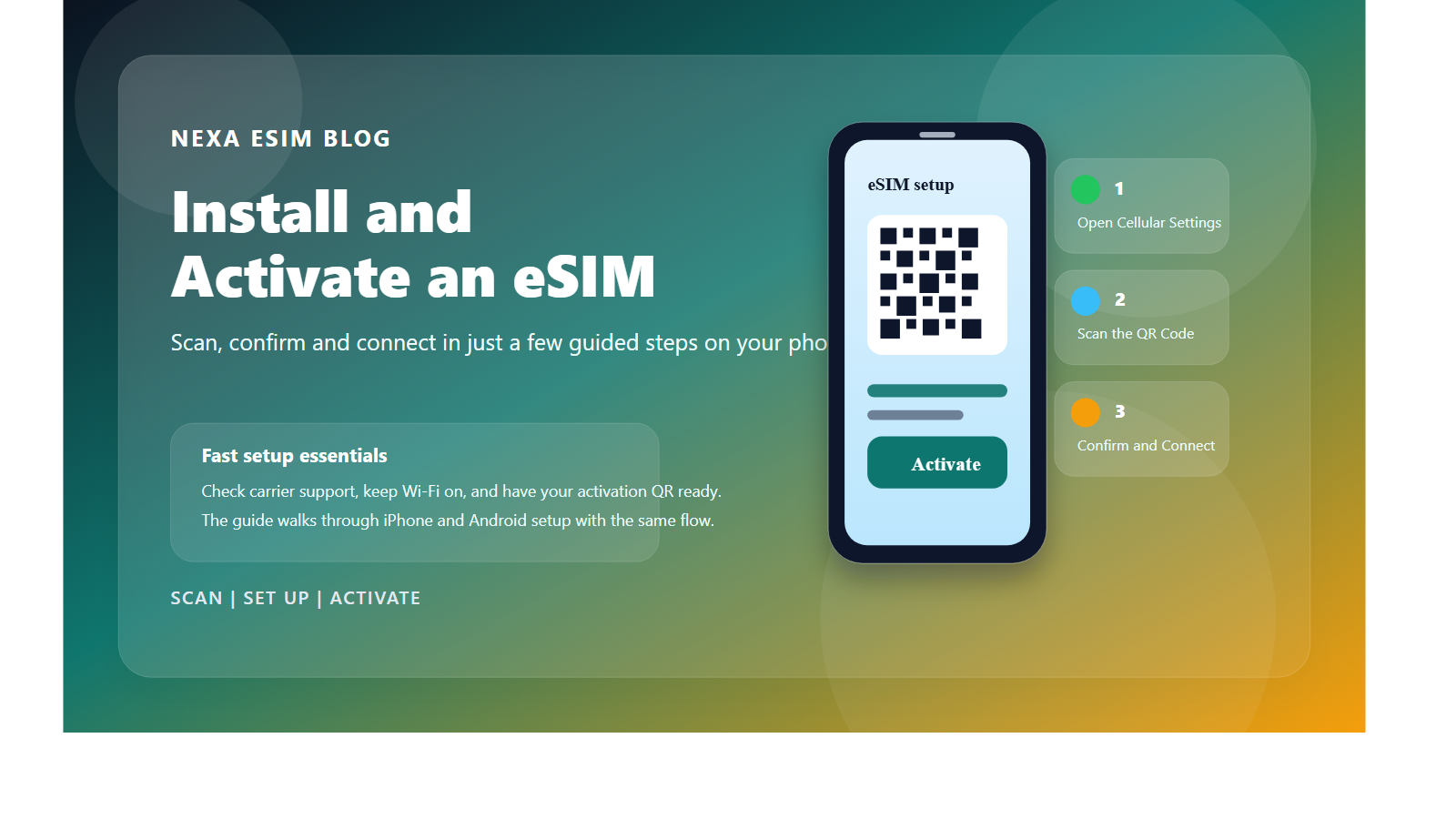
After purchase, you'll receive QR code activation instructions. It's best to install your eSIM before departure, though you can wait until you arrive. Ensure your device is eSIM-compatible (most newer iPhones, Pixels, and Samsung Galaxy models are) and unlocked from your home carrier. Follow our eSIM installation guide for step-by-step activation help.
FAQ
What's the best eSIM for South Africa travel?
For most tourists, Vodacom provides the best balance of coverage and reliability across diverse destinations. MTN is excellent for city-focused trips with higher data needs.
Can I get unlimited data eSIM for South Africa travel?
Yes, several providers offer unlimited data plans, though these typically have fair usage policies that reduce speeds after 20-50GB. For most tourists, limited data plans (5-15GB) are more cost-effective.
Is eSIM good for backpacking South Africa?
Absolutely. eSIMs eliminate the need to find SIM card vendors upon arrival and allow easy switching between countries if you're backpacking through multiple Southern African nations.
How do I buy a cheap eSIM for South Africa travel?
Compare plans across providers, looking at cost per GB. Shorter validity plans (7-10 days) often offer better value than 30-day plans if that matches your trip length. Cell C-based plans sometimes offer lower prices.
Which network is best for digital nomads in South Africa?
MTN generally offers the fastest and most consistent speeds in urban areas where digital nomads typically work, with good 5G coverage in city centers.
Do I need a South Africa tourist eSIM if my hotel has WiFi?
Yes, for several reasons: reliable connectivity when exploring, navigation between destinations, emergency situations, and avoiding insecure public WiFi networks.
Can I use my South Africa eSIM in neighboring countries?
Some regional plans include coverage in neighboring countries like Namibia, Botswana, or Zimbabwe. Check plan details before purchasing if you're planning multi-country travel.