Clear, travel-first explanation of a prepaid travel eSIM: what ‘prepaid’ means, how activation works (QR/EID), benefits, limitations and how to choose a regional or global plan. Includes practical activation tips and NexaEsim support links.
Prepaid travel eSIM definition: a prepaid travel eSIM is a digital SIM profile you buy and pay for in advance to use data (and sometimes calls/SMS) on a compatible device while abroad — no physical SIM swap, no ongoing contract, and usually instant delivery by QR or activation code.
Quick answer
A prepaid travel eSIM is a paid, time-limited digital mobile plan you install on a compatible phone before or during a trip to get local or regional data without buying a physical SIM or putting your home plan on roaming. Compare NexaEsim plans for 200+ countries: See plans.
Simple definition: prepaid travel eSIM explained
A prepaid travel eSIM is an electronic SIM (eSIM) profile provisioned to your device’s embedded SIM module (eUICC). “Prepaid” means you pay up front for a fixed amount of data, a set number of days, or both. Once purchased you receive a QR code or activation link to install the profile; the eSIM then connects to local mobile networks using agreements the eSIM provider has with carriers in your destination.
What “prepaid” means in eSIM terms
Prepaid eSIMs are paid in full at purchase, have no monthly billing or contract, and include a validity period (for example: 7 days, 30 days, or a defined data cap). When the plan expires, the profile can remain on the device but will not provide service until recharged or replaced by a new plan.
How a travel eSIM differs from roaming and a physical SIM
| Type | How it works | Best for |
|---|---|---|
| Prepaid travel eSIM | Digital profile installed on device; paid in advance; uses local/regional networks | Short trips, country-hopping, tourists who want convenience |
| Physical local SIM | Plastic SIM you buy at an airport or shop and insert into phone | Longer stays where you need local number and often cheaper local minutes |
| Home carrier roaming | Your home plan stays active abroad, often with roaming fees | Business travelers who need to keep the same number and billing |
How prepaid travel eSIMs work (non-technical)
At a high level: you buy a prepaid eSIM plan from a provider, receive an activation QR or link, install the profile to your device’s Digital SIM/EID area, and switch your mobile data or primary line to that profile while traveling. The provider provisions the profile through secure eSIM infrastructure (SM-DP+) and the device stores an identifier (EID) that maps the profile to your handset.
Buying and delivery (QR, eSIM code, instant activation)
- Purchase online via the provider’s site or app.
- Receive a QR code, activation link, or manual installation code instantly by email or in-account dashboard.
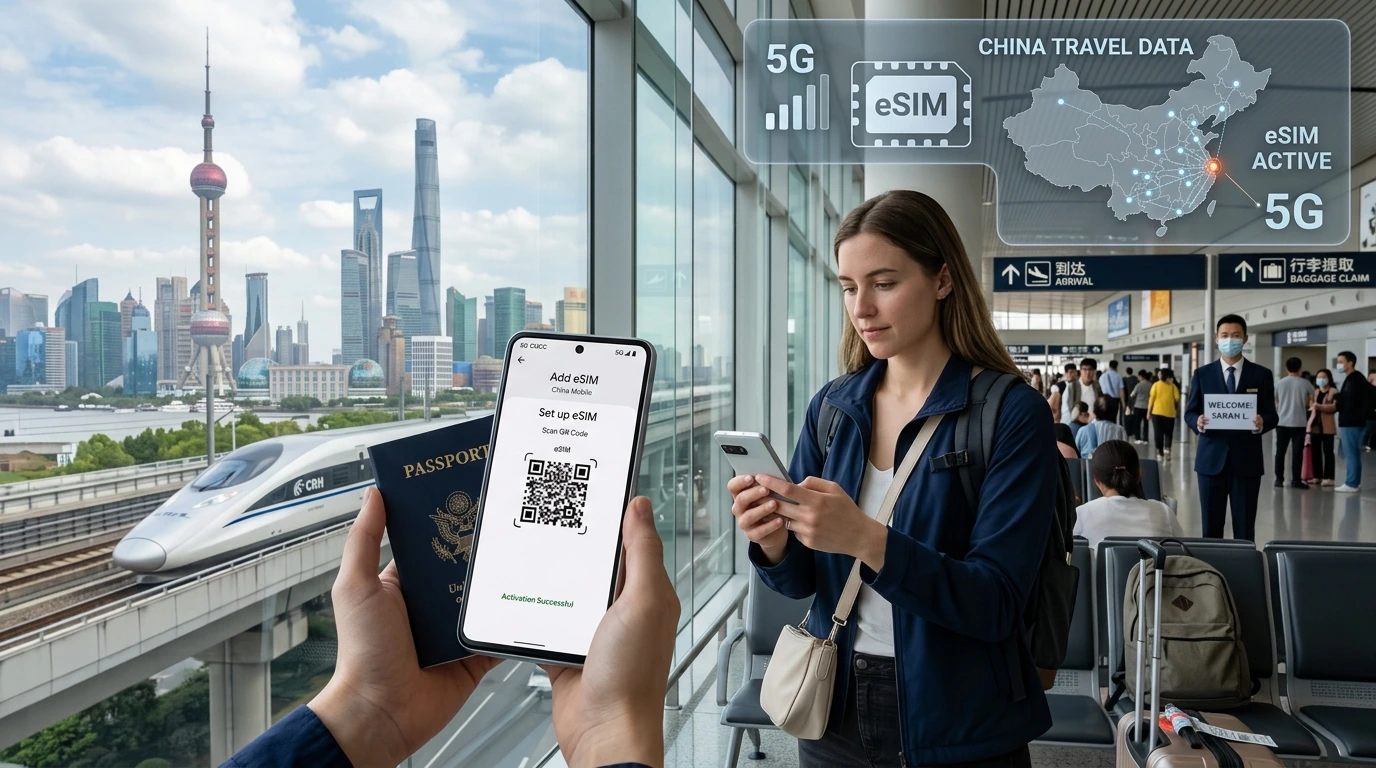
- Scan the QR (or follow the link) in your phone settings to download the profile.
Device requirements & checking compatibility
Most newer iPhones, Google Pixels, and Samsung Galaxy phones support eSIM. Check your device: on iPhone go to Settings > General > About and look for an EID or Digital SIM; on many Android phones look in Settings > Network & Internet > Mobile network > Add carrier. For detailed model compatibility, see NexaEsim’s device list: Compatible devices.
Activation steps (before travel vs on arrival)
- Buy the plan and save the QR or activation code.
- If possible, add the eSIM before you leave and test it on Wi‑Fi.
- On arrival, if you didn’t pre-install, connect to Wi‑Fi, scan the QR or open the activation link, and enable the eSIM profile for data.
- Set your data roaming or primary data line to the eSIM profile in settings.
For step‑by‑step screenshots and troubleshooting, visit our installation guide: Installation guide.
Benefits & limitations of prepaid travel eSIMs
Top benefits for travelers
- Convenience: buy and install online — no SIM tray fiddling.
- Fast: instant delivery by QR; useful for tight layovers or multi-stop trips.
- Cost control: pay up front for a fixed data allowance and expiry.
- Multi-country options: regional or global plans cover several countries on one profile.
Common limitations
- Coverage gaps: not all remote areas are covered by every eSIM partner network.
- Hotspot/tethering: some plans allow tethering but others restrict it or apply fair‑use limits.
- Device or carrier lock: phones locked to a carrier may not accept a second profile.
- Profile management: switching profiles is simple but requires familiarity with device settings.
Prepaid vs regional vs global eSIM plans
Prepaid single-country plans are ideal for one destination; regional plans cover several neighboring countries (good for short hops across borders); global plans provide broad coverage in many countries but may have different performance or data caps per region. Choose based on your itinerary and how often you need to switch carriers.
When to choose each
- Single-country: long stay in one place and you need reliable local coverage.
- Regional: multi-country trips within a continent or area (e.g., SE Asia or Europe).
- Global: many-country trips where convenience and fewer profile changes matter.
Practical tips: buying and using a prepaid travel eSIM
Pre-trip checklist
- Confirm your phone supports eSIM: see Compatible devices.
- Back up your current SIM settings and note your carrier lock status.
- Purchase and install the eSIM on Wi‑Fi before departure to test activation.
- Keep a backup option: a secondary physical SIM or a plan on file in case of region gaps.
Troubleshooting quick steps
- No signal: toggle Airplane Mode, reselect the eSIM profile, restart device.
- APN issues: check provider’s activation notes or the installation guide.
- Still stuck: contact support and include your device model, EID, and order ID — see NexaEsim support via our plans page or blog for tips: NexaEsim blog.
Security, privacy, and transferability
eSIM profiles are provisioned over secure channels (SM-DP+). They do not expose additional personal data beyond what a normal SIM does, but treat activation QR codes like sensitive credentials — do not share them publicly. eSIM profiles are tied to the device EID; you can usually move a plan between devices only if the provider and device support transfer features.
Why choose NexaEsim for prepaid travel eSIMs
NexaEsim offers instant digital delivery and a wide catalog of prepaid plans across 200+ destinations, with clear plan details and dedicated activation support. If you want to compare available prepaid plans, coverage, and validities for your trip, start here: Compare NexaEsim plans.
FAQ
The most common quick questions about prepaid travel eSIMs. For more detailed guides and screenshots, see our Installation guide and Compatible devices pages.
What does “prepaid” mean for an eSIM?
Prepaid means you pay for the entire plan up front. The plan includes a data allowance and a validity period. When the prepaid period or data is used up, service stops until you buy another plan.
Do prepaid eSIMs work on iPhone and Android?
Yes—most modern iPhones and many Android phones (Google Pixel, Samsung Galaxy, etc.) support eSIM. Check your model on the NexaEsim device list: Compatible devices.
Can I keep my regular SIM and use an eSIM at the same time?
Yes, many phones support dual‑SIM (physical + eSIM). You can keep your home number active while using the eSIM for data; configure which line is used for cellular data in Settings.
Do prepaid travel eSIMs allow personal hotspot/tethering?
That depends on the plan and local carrier rules. Some prepaid eSIM plans permit tethering; others limit or block it under fair‑use policies. Check plan details before purchase.
How long does a prepaid travel eSIM last?
Validity varies by plan—common durations include short stays (a few days), weekly, and monthly options. See the specific plan’s validity period when selecting a prepaid option on NexaEsim’s plans page: Compare plans.
Can I buy and activate before I leave?
Yes. Many travelers add the eSIM on Wi‑Fi before departure to verify it installs correctly. Some plans require activation in the destination country—check plan notes in the product details.
Related resources & next steps
Ready to pick a prepaid plan? Compare available prepaid plans across destinations and buy instantly: Compare NexaEsim plans. For detailed step‑by‑step screenshots and common fixes, visit our Installation guide. For device support questions, see Compatible devices or read tips on our blog.
Editorial note: Byline: NexaEsim Travel Team. Last updated: 20 May 2026.